Gilbert has grown rapidly, and with that development comes more households asking for assistance differentiating psychological assistance animals from true service pets. The terms get mixed up in conversation, on housing applications, and at cafe counters. I train pet dogs in the East Valley, and the confusion isn't just semantics. The difference identifies where your dog can go, how the law secures you, and what type of training will really assist. If you're looking for assistance for stress and anxiety, PTSD, autism, diabetes, movement limitations, or merely solitude, comprehending these courses can conserve months of trial and countless dollars.
What each classification actually means
A psychological support animal, normally called an ESA, is a family pet whose presence helps minimize symptoms of a psychological or emotional disability. There is no task requirement. If cuddling with your dog lowers your heart rate or assists you sleep, that stands. The defense for ESAs sits generally in housing. With appropriate documentation from a licensed healthcare provider, you can cope with your dog in housing that otherwise limits animals, frequently without family pet fees. ESAs do not have a right to go into non-pet public locations like grocery stores, dining establishments, or theater. They are not covered under the Americans with Disabilities Act.
A service dog is trained to carry out specific tasks that alleviate an individual's disability. Think about it as medical equipment with a heartbeat. The jobs should be individually trained and trustworthy in real-world settings. Examples consist of informing to approaching anxiety attack, interrupting dissociation, obtaining medication, bracing to aid with balance, assisting a handler who is blind, or signaling to high or low blood sugar. Service dogs are covered by the ADA, which grants public gain access to rights to the majority of places where the general public can go. In practice, this means a trained service dog can accompany you into Fry's, a Gilbert coffee bar, or a congested farmer's market.
Therapy canines are a third classification that frequently muddies the waters. These are family pets trained to supply convenience to others in centers like hospitals, schools, or therapy clinics under a handler's assistance. Therapy canines have no public access rights outside of invited settings. They are different from ESAs and various from service dogs.
The legal landscape in Arizona and how it plays out in Gilbert
The ADA is federal, and it preempts local laws. Arizona includes its own layer, including penalties for misrepresenting a pet as a service animal. In Gilbert, that indicates:
- A business can ask only 2 concerns when your impairment is not obvious: Is the dog a service animal required since of a disability? What work or task has the dog been trained to perform? Staff can not request for paperwork or demand a presentation on the spot.
If a dog is out of control or not housebroken, the handler can be asked to remove it, no matter status. I've been in a Gilbert hardware store where this call needed to be made after a large dog lunged repeatedly at consumers. It is never an enjoyable conversation, but the law supports the elimination when behavior crosses the line.
ESAs are covered by the Fair Housing Act. Your property owner needs to make reasonable lodgings if you have a disability-related requirement for the animal and correct paperwork. That implies apartments along Val Vista or Elliot can't blanket-ban your ESA or tack on pet lease. On the other hand, ESAs are not allowed into public organizations that are not pet friendly. If a coffee bar in Agritopia posts "Service Animals Just," that omits ESAs.
Misrepresentation brings repercussions in Arizona. If you put a vest on your pet and call it a service dog to access, you run the risk of fines and ejection. More significantly, it deteriorates trust for those who depend on service dogs for everyday functioning.
The training space that really matters
People often Robinson Dog Training training a service dog for anxiety ask if they can "license" an ESA through training. There is no main ESA accreditation. You can and should train your ESA in fundamental manners so they're safe and welcome in pet-friendly spaces, however no quantity of obedience changes an ESA into a service dog unless you include disability-mitigating jobs and proof-level public access skills.

Service dog training looks various from obedience. A reputable sit or down is the beginning, not the end. The dog needs to generalize habits throughout environments, hold focus through distractions, and perform tasks under stress. Public access abilities are engineered, not assumed. We practice navigating tight store aisles, choosing long periods under tables at restaurants, overlooking the smells that drift out of a butcher counter, and staying neutral around kids running toward splash pads at Gilbert Regional Park.
Task training is customized. For a customer with panic attack, the dog might discover deep pressure therapy on cue, early intervention when pacing or shallow breathing begins, and anchoring to guide the handler to an exit without pulling or panic escalation. For diabetes, the scent detection procedures require hundreds of repetitions with rewarded notifies at threshold levels, and then proofing in real-world humidity and heat. Gilbert summertimes put unique stress on scenting; hot air and pavement radiate smell differently, and we train for that.
Temperament isn't negotiable
Not every dog wants the task. I've personality checked positive German Shepherds that washed out since they stunned at unexpected metal sounds or focused on squirrels in a manner that never ever enhanced. I have actually seen Goldendoodles with best family manners freeze in tight spaces. Breed stereotypes assist however do not decide the result. The dog must be durable, handler-focused, ecologically neutral, and biddable. For psychiatric work, body softness and a desire to make contact matter. For mobility, physical structure and orthopedic soundness matter.
View Service Dog Trainer in Gilbert in a full screen map
" width="560" height="315" style="border: none;" allowfullscreen="" >When clients come to me with a precious family pet they want to convert into a service dog, we run a structured assessment. We evaluate healing from surprise sounds, tolerance for crowds, shock reaction to a cart wheel brushing past, food neutrality, and ability to disengage from other pets. We likewise look for cooperative issue resolving, which is the dog's flair for checking in when unsure instead of shutting down or thinking hugely. If a dog falters repeatedly, I recommend the ESA course or therapy work rather than service positioning. It is kinder to the dog and more secure for the handler.
A useful look at costs, timelines, and what you can anticipate in Gilbert
A well-trained service dog represents 1 to 2 years of structured work, generally 600 to 1,200 training hours, and thousands of micro-repetitions. If you're working with an expert trainer in the East Valley, expect a variety. Owner-trainers working with targeted lessons may spend 4,000 to 12,000 dollars throughout the program, plus equipment, veterinary care, and public training sessions. Program pet dogs from trustworthy organizations often go beyond 20,000 dollars, and the strongest programs have waitlists determined in months, in some cases years.
An ESA path is faster and less costly. You still want manners training, specifically if you prepare to frequent pet-friendly patio areas or travel. Six to twelve weeks of fundamental work can change every day life: loose leash walking around Heritage District crowds, off-switch habits in the house, and calm greetings. Your main investment for ESA status is proper documentation from your licensed supplier and ongoing training to be a considerate member of the community.
Heat makes complex both tracks here. Summer season surface areas can hit 140 degrees, and pads burn quickly. We move public sessions to morning, prioritize indoor areas like SanTan Town throughout low-traffic hours, and condition canines to settle with cooling mats and water breaks. This is not a little factor. A dog that can not preserve efficiency in heat-safe windows will struggle to meet service standards in Arizona.
What public access looks like when done right
There is a noticeable distinction in between an animal that behaves and a service dog that works. In a Gilbert grocery store you watch for couple of things: quiet entry, handler-dog interaction mainly in whispers and tiny hand signals, leash slack, eyes periodically signing in without need barking or pulling. The dog settles in a tuck near the handler's side when they stop briefly to compare labels. No sniffing fruit and vegetables. No nosing screens. When another dog passes, the service dog stays neutral, even if the other animal is hyper-focused. If a kid asks to pet, the handler might decrease politely. If they accept, they put the dog into a regulated greeting that ends on cue.
This discipline is built, not talented. We practice sluggish elevator doors in medical buildings, unexpected alarms, and the echo chamber that turns an easy stairwell into a diversion trap. Handlers learn how to promote nicely and confidently with personnel, and how to troubleshoot without flustering the dog. They also find out when to call it and leave. A service team that steps out after two early warning signs respects the dog's limitations and protects the general public's regard for working teams.
Common mistaken beliefs that cause trouble
People frequently think a vest creates rights. Vests are optional for service canines under the ADA. They can help indicate to others that the dog is working, however rights do not depend upon gear. On the other hand, a vest on an ESA does not give public gain access to. Organizations might still ask your dog to leave if it is an ESA and the area is not pet friendly.
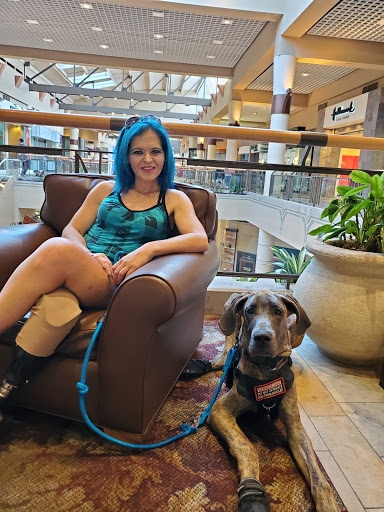
Another misconception is that a physician's letter certifies a service dog. Doctor can compose letters supporting an ESA for housing. They do not certify service pets. Service status is made through trained work or tasks and public access behavior. There is no national registry acknowledged by the government. Those sites that print certificates for a fee offer paper and plastic, not legal status.
View Service Dog Training in Gilbert in a full screen map
" width="560" height="315" style="border: none;" allowfullscreen="" >Lastly, people sometimes presume that psychiatric service canines are less "real" than guide pets or mobility pet dogs. The ADA makes no such distinction. If your dog carries out skilled tasks that alleviate your psychiatric impairment, it is a service dog with complete public access rights. The requirement for training and habits remains the same.
When an ESA is the best call
For lots of customers, the goal is relief at home and in real estate, not a working dog at their side in every space. If your symptoms enhance substantially with friendship and routine, an ESA can be precisely right. You can concentrate on socialization, house manners, and strength without the pressure of job training and proofing in complicated environments. You stay truthful about where your dog belongs and prevent the tension of public interactions where staff are allowed to question you.
There are likewise dogs who are ideal at home and in quieter pet-friendly settings but will never ever be content in tight shop aisles or under tables throughout long meals. Asking that dog to be a service dog is unfair. Developing a rich life with that dog as an ESA can provide the majority of the advantage you desire without forcing a square peg into a round hole.
When a service dog changes the game
Some impairments demand more than presence. A young veteran in Gilbert who dissociates in crowded areas might require a dog that disrupts the spiral, leads them to a safe exit, and applies grounding pressure so they can speak with staff or call a member of the family. A moms and dad with POTS may depend on their dog to signal before faintness crests, recover water, and brace for brief transitions. Those specific, reliable habits are the reason service pet dogs are given access. They are not a convenience or a novelty. They belong to a medical plan.

Teams that reach this level typically discuss energy budget plans. Where a trip to Costco would clear the tank for the day, with a trained dog, the handler keeps enough bandwidth to prepare supper or participate in a kid's game. Service work shines in this practical math.
How we evaluate a candidate in Gilbert
An extensive assessment blends environment, health, and learning design. I start at a quiet park in the early morning, when temps are manageable. We relocate to Heritage District sidewalks after 9 a.m., when strollers and scooters appear. I watch for healing from shocked looks, the ease with which the dog go back to the handler after a novel odor, and responsiveness when the handler reduces their voice rather of raising it. We check an indoor space with smooth floors, like a home improvement store, due to the fact that scraping cart wheels and echoing PA systems can turn a delicate dog into shutdown. Just after these phases do we attempt a coffee shop settle, which is the hardest request most canines under 15 months.
On the health side, I request for veterinary records, screen for orthopedic warnings, and talk about future size. A 55-pound dog can brace. A 28-pound dog can not, but might excel at psychiatric tasks or medical signals. We talk about sensible timelines. If a customer requires instant aid, we check out interim strategies: skills the handler can build now, equipment that decreases pressure, and short-term human assistance while the dog develops.
What training looks like week to week
Good service dog training is tiring in the best way. Brief sessions, regular associates, cautious boosts in problem. We might invest an entire week building a soft chin rest in the handler's palm, which becomes the anchor for deep pressure therapy or a calm point throughout high blood pressure checks. We reward neutral glimpses at interruptions instead of punishing interest. We evidence jobs under distractions gradually: first at a quiet store corner on a weekday morning, then a busier aisle, then throughout an occasion like the Gilbert Farmers Market when the dog is ready.
Handlers discover to keep logs. We track triggers, latency to respond, mistake types, and stress indications like paw lifts or lip licks. Information keeps us truthful. If alert dependability drops from 80 percent to 50 percent when humidity spikes, we shift to climate-controlled practice and revisit scent pairing sessions. If a dog alerts too broadly, we narrow the requirements rather than celebrate false positives.
For ESAs, the focus is various. We teach a rock-solid choose a mat, courteous greetings, and a foreseeable routine that shaves the peaks off anxiety. We train the human too: how to structure decompression walks along the canal, how to separate the day with short training video games that tire the brain as much as the legs, and how to proactively handle visitors so the dog doesn't practice jumping.
Etiquette for handlers and the public
Gilbert is friendly, and friendly often implies curious. Handlers can reduce interactions by preparing a one-sentence script. Something like, He's working, thanks for offering us area. Or, You can say hey there, however please let me launch him first. A calm tone avoids escalation.
Businesses do best when staff follow the ADA script. Ask the 2 permitted concerns politely if there's doubt. See behavior. If the dog is peaceful, under control, and not bothering customers, let the team go about their company. If not, it is proper to ask the handler to eliminate the dog. Consistency builds neighborhood trust.
For the general public, withstand the urge to call out to a dog or reach without authorization. Even a short-term lapse can interfere with a critical job like glucose alerting.
Red flags when looking for training
Be careful of guarantees. No one can assure a dog will become a service dog before temperament and health are shown over time. Be cautious of fitness instructors who offer "service dog accreditation cards" or who rush public access sessions before structure work is strong. Search for transparent techniques, a prepare for proofing tasks in genuine environments, and a desire to rinse a dog that does not fulfill requirements. That last piece is hard mentally, but it separates accountable programs from the rest.
Ask how the trainer deals with setbacks. If a task stalls, how do they change? Do they use aversives that suppress behavior without teaching an option? In my experience, heavy-handed corrections often develop peaceful canines that look compliant however lose effort, which is the reverse of what you desire in a working partner.
A brief map for picking your path
- If companionship eliminates symptoms and you primarily require housing protection, pursue ESA documentation with your licensed service provider and buy manners training. If you need particular, skilled tasks to operate securely in every day life, check out a service dog, starting with an honest temperament and health assessment. If your current animal struggles with noise, crowds, or other dogs, think about ESA or therapy work rather than service placement, and be proud of that choice. If your timeline is urgent, develop short-term human assistances while you establish the dog. Rushing service criteria backfires. If a trainer assures accreditation or instantaneous public access, keep looking.
What success feels like
A customer with PTSD fulfilled me at a coffeehouse near Lindsay and Warner last spring. 2 months earlier, they might barely sit inside for five minutes without their heart rate surging. With a dog trained to push at the first sign of their leg bouncing, then apply deep pressure under the table, they stayed for 20 minutes, then 30. We built an exit regimen that was peaceful and practiced, so they felt in control. By summer season, they managed a grocery run during low-traffic hours with no panic spiral. The dog didn't repair whatever. It widened the lane enough that treatment and doctor check outs could stick.
Another customer, an university student leasing in Gilbert, went the ESA path. We changed evenings that used to liquify into doom-scrolling into 2 brief training blocks and a decompression walk at dusk. Sleep improved, grades followed, and there was no tension about taking a dog everywhere. Very same species, different tasks, both valid.
The bottom line for Gilbert residents
ESAs and service pets both support psychological health and impairment, however they are not interchangeable. ESAs are family pets with a protected function in housing. Service canines learn medical partners with public gain access to rights. If you match the course to your requirements, your dog can grow and your life can broaden. If you try to force a dog into the wrong function, frustration piles up and the community's trust erodes.
Gilbert has the resources to do this well. There are veterinary centers that understand working canines' requirements, indoor spaces for summertime proofing, and fitness instructors who will tell you the reality, even when it hurts a little. Ask cautious questions, honor your dog's temperament, and respect the law. The rest is constant work, repeating, and patience, which is how all excellent dog training gets done.